AI as a Force Multiplier for Regulatory Consulting Firms
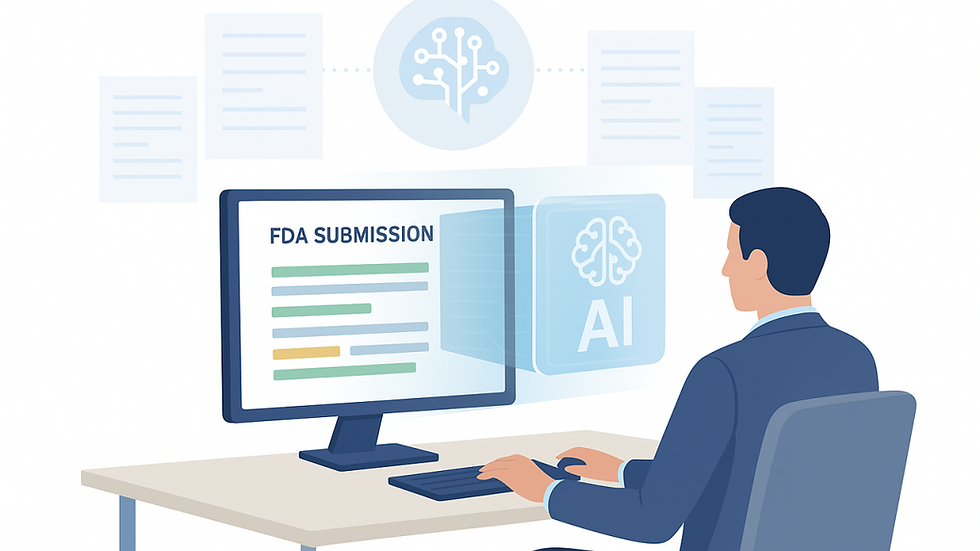
For decades, regulatory consulting firms and independent agents have served as the trusted bridge between life sciences companies and the FDA. They bring not only technical regulatory knowledge but also interpretive expertise to turn complex, often unclear, rules into clear, actionable strategies. Their role combines strategy, translation, and advocacy. Successful consultants understand that regulatory success isn’t just about ticking boxes—it’s about anticipating how the agency will interpret those boxes in a specific product, market, and time. But the landscape is changing swiftly. From 2020 to 2024, the FDA issued over 200 new guidance documents covering topics such as digital health regulation and advanced manufacturing. Each new document adds layers of complexity to an already intricate web of requirements. Furthermore, enforcement trends shift, scientific standards evolve, and policy interpretations can change seemingly overnight. The regulatory process is under increasing pressure to accelerate market access for innovative therapies and devices without compromising safety or efficacy.
This has a significant impact on consulting firms. Clients expect faster responses, more precise insights, and cost-effective services. What used to take weeks now needs to be completed in days. Requests for proposals are becoming increasingly competitive, with decision-makers ranking firms not only on their expertise but also on their ability to leverage technology for quicker and more in-depth analysis. In an environment where a single mistake can cause costly delays or rejection, predicting regulatory feedback is more valuable than ever.
This is where AI in regulatory consulting is changing the game. AI can process and analyze vast amounts of regulatory data—from past FDA decisions to warning letters, guidance documents, and publicly available review memos—at a scale and speed no human team can match. It identifies patterns in agency responses, uncovers relevant precedents, and maps regulations directly to a client’s product features and claims. Instead of manually sifting through archives or relying solely on institutional memory, consultants get near-instant access to insights grounded in thousands of real-world examples.
This capability offers much more than efficiency. AI-enhanced reviews enhance accuracy by identifying potential risks that might be overlooked manually. They enable junior staff to handle more complex analyses confidently, freeing senior consultants to focus on strategy and client interactions. They also allow firms to scale their services, managing more clients, larger projects, and tighter deadlines without proportionally increasing staff. Rather than replacing human expertise, AI acts as a force multiplier, helping consultants deliver deeper, faster, and more strategic advice.
Lexim AI was created to integrate seamlessly into this workflow. For firms advising on FDA submissions—whether a 510(k), NDA, BLA, or pre-submission—Lexim can analyze draft documents through an “FDA-trained” lens, flagging inconsistencies, missing context, or claims likely to prompt regulatory questions. For consultants working with global clients, Lexim can align and cross-reference requirements across multiple regulatory agencies, streamlining what was previously a painstaking manual process. The result is not just time saved but a higher level of preparedness before engaging with regulators.
The business impact is profound. Firms using AI can respond faster, increase throughput without compromising quality, and boost profitability by completing more projects in less time. In competitive bids, offering AI-driven insights positions a firm as innovative and operationally advanced, traits that resonate with clients who want partners capable of navigating complex markets. Most importantly, AI helps reduce regulatory delays, potentially saving clients millions in lost market time. These outcomes strengthen existing client relationships and shape the firm’s reputation, influencing future business.
Regulatory consulting has always depended on relationships. Clients return to trusted advisors who deliver results, especially in high-stakes situations. Trust builds on consistent accuracy, strategic foresight, and reliability under pressure. As regulatory requirements increase in volume and complexity, human expertise alone is insufficient to meet client demands for speed and precision. Firms that combine regulatory knowledge with AI-driven insights will not only keep pace—they will set new industry standards.
Lexim exists to help consulting firms meet these standards. By pairing experienced interpretive skills with AI power, Lexim enables firms to make more accurate predictions, respond faster, and submit stronger applications, making clients more confident, projects more efficient, and approvals more predictable. In a market where a good strategy can mean the difference between launch and delay, this isn’t just an advantage—it’s becoming the expectation.
To learn more or get help with your needs, please contact us at Lexim AI.


Comments